
Back-to-School Safety Checklist That Every Parent Should Follow in 2026

Posted by: By Yunirides
Aug 18, 2026
When school reopens, the first week brings a whole mix of excitement and chaos — new schedules, new routines, new classrooms, and many families have to figure out a new transportation routine as well. Regardless of whether your child uses a district bus, a specialized transport service, or you drop them off, a few simple checks before the first bell rings can prevent a lot of first-week stress.
Here's a practical back-to-school safety checklist to work through before the school year starts.
1. Confirm Transportation Details in Writing
Before the first day, confirm the transportation arrangements in writing; don't depend on memory or an impromptu meeting with another parent. Make sure the following points are clear and sorted before school restarts:
- Exact pickup and drop-off times and locations
- The name of the transportation provider, if it isn't operated by the school district
- Who to contact if a pickup is missed or delayed
If your child has an IEP that includes transportation as a related service, this confirmation matters even more — transportation details tied to an IEP should already be documented, and it's worth double-checking that the plan on file matches what will actually happen at the bus stop. To learn more about what IEP transportation includes see our complete parent's guide to IEP transportation.
2. Walk the Route Before Day One
Before school starts, walk with your child to the bus stop or pickup location at least once ideally at the same time the route will be used (the time they will go to school) so that they can look for:
- Sidewalk gaps or missing crosswalks
- Traffic patterns at that specific time of day
- Visibility issues (blind corners, poor lighting for early pickups)
This step is especially important for parents of younger children or children who need extra time to process instructions.
3. Review School Bus Safety Basics with Your Child
No matter if it's a yellow bus or a specialized transport vehicle, these are nonnegotiable basics:
- The vehicle should come to a complete stop before approaching it
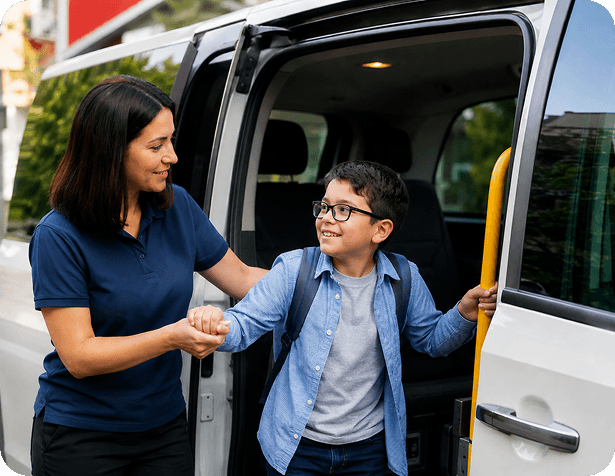
- While boarding and exiting, use handrails
- Stay seated and keep your seat belt fastened throughout the ride
- Know which stop is theirs, and what to do if they're unsure
For children who use wheelchair-accessible transportation or require specific seating, it's worth confirming directly with the provider how tie-downs and restraints are checked before each trip, not just assuming it happens.
4. Update Emergency Contacts and Medical Information
Every school year, medical information tends to change — a new allergy, a new medication, a new emergency contact. Parents need to update this with:
- The school administration department
- The transportation provider directly, if it's separate from the district
- Any after-school program or caregiver who might need to know
This might look like a small task that's easy to skip, but it genuinely matters if something goes wrong mid-route.
5. Talk Through "What If" Scenarios
Kids tend to handle unexpected situations better when they've thought about them in advance, rather than trying to react in the moment. A few worth covering:
- What to do if the bus or ride doesn't show up
- Who to call if they miss their stop
- What to do if a stranger approaches at the bus stop
- Who they can talk to if something happens on the ride that makes them uncomfortable
For families of children with special needs, this conversation may need to be more specific and repeated more than once — our guide to what changes for families of special needs students covers why consistency and repetition matter here.
6. Ask Transportation Providers the Right Questions
If there's a need to use a transportation service outside the district's own fleet, be it for special needs transportation, McKinney-Vento eligibility, or general supplemental transport, don't assume "safe" means the same thing to every provider. Ask directly:
- Are drivers background-checked, and how often are checks renewed?
- Is there real-time GPS tracking you can access?
- What's the protocol if a vehicle breaks down mid-route?
- How are last-minute schedule changes communicated?
We put together a full list of these questions in 12 questions every parent should ask before signing a transportation contract — worth reading in full if you're evaluating a new provider this year.
7. Set Up Communication Channels Before You Need Them
Don't wait for the first delay or issue to figure out how to reach your transportation provider. Before school starts:
- Save the provider's direct contact number in your phone
- Confirm whether they use text, app notifications, or phone calls for updates
- Ask how far in advance you'll be notified of route or schedule changes
8. Revisit the Plan Mid-Year, Not Just in August
A safety checklist isn't a once-a-year task. Routes change, staff change, and a child's needs can change too, especially for students with an IEP or evolving medical needs. Building in a quick check-in each semester, rather than assuming August's plan still holds in January, catches problems before they become daily stress.
Frequently Asked Questions
- What should be on a back-to-school safety checklist? A solid checklist covers confirming transportation details in writing, walking the bus stop or pickup route in advance, reviewing boarding and seatbelt safety with your child, updating emergency contacts and medical information, and discussing what to do if a ride is late or doesn't show.
- How do I prepare my child for the school bus for the first time? Practice the basics before day one: waiting for the bus to fully stop, using handrails, staying seated, and knowing their stop. Walking the route together beforehand also helps reduce first-day anxiety.
- What questions should I ask about a school transportation provider? Ask about driver background-check frequency, whether GPS tracking is available to parents, the protocol for vehicle breakdowns, and how schedule changes are communicated. For special needs transportation, also ask how tie-downs and restraints are checked before each ride.
- Does my child's IEP guarantee transportation safety accommodations? If transportation is written into your child's IEP as a related service, the district is responsible for delivering it as documented, including any required accommodations like a monitor or specific seating. It's worth confirming the plan on file matches what actually happens at pickup.
- How often should families update transportation safety information? At least once per semester, not just once a year. Medical needs, emergency contacts, and even routes can change mid-year, especially for students with evolving IEP requirements.
The Bottom Line
None of this checklist requires special expertise, just a few deliberate steps before the routine sets in. For families relying on specialized or district-contracted transportation, the same principle applies at a larger scale: the providers worth trusting are the ones who can answer these same questions clearly, not the ones who just say safety is a priority without backing it up.
If you're evaluating transportation options for your child this year, especially special needs or IEP-related transportation, book a consultation with Yuni Rides to talk through your child's specific needs before the first day of school.
Apply to Drive With Yuni Rides
Looking for a driving opportunity with predictable weekday schedules and consistent route assignments? Join Yuni Rides today and help make a difference in your community.