
Best School Kids Transportation Service in California & Illinois: A Local Parent's Guide

Posted by: By Yunirides
Jun 26, 2026
At 7:15 last Tuesday, Jennifer from Oak Park stood in her Chicago driveway watching the school bus pull away. Her daughter Mia, who has sensory processing disorder, had refused to board. Again. The driver couldn't wait. Jennifer called in sick to work. For the third time this month.
Three hours later and two thousand miles west, a dad in Sacramento faced the mirror image of the same problem. His son's IEP-mandated transportation had been canceled without warning. No call. No text. Just a kid standing on a corner in Carmichael waiting for a ride that never came.
If you're searching for the best school kids transportation service in California or Illinois, you're probably living some version of this story. The school district says they provide transportation. The IEP says it's covered. But the reality on the ground—in Oak Park, in Carmichael, in San Jose, in Naperville—looks very different from the policy manual.
This guide is for parents in those exact zip codes. Not a generic national overview. Real information about what safe, specialized school transportation actually looks like in California and Illinois, what your child is legally entitled to, and how to spot a local provider that won't leave your kid on the curb.
Why Local Parents Are Ditching the District Bus
California and Illinois both have robust special education frameworks. In theory, transportation is a related service under the Individuals with Disabilities Education Act (IDEA). In practice, district budgets are stretched, driver shortages are acute, and the gap between policy and execution is where families get hurt.
In Illinois, the State Board of Education requires districts to provide transportation for students with IEPs when it is necessary for the student to benefit from special education. In California, Education Code Section 39807 mandates transportation for students with disabilities when specified in the IEP. Both states have strong legal foundations. But enforcement and quality vary wildly by district.
- Chicago Public Schools families: Buses are chronically late, sometimes by 45 minutes or more. For a child with autism, that unpredictability destroys the morning before school even starts.
- Bay Area parents (San Jose, Fremont, Oakland): District transportation is often unavailable for out-of-district placements, forcing parents to drive their kids to specialized schools 30+ miles away.
- Sacramento County families: Driver turnover is so high that some children see a new face every week. For kids with attachment anxiety or communication delays, that's not an inconvenience—it's a developmental setback.
- Suburban Illinois (Naperville, Wheaton, Evanston): Parents report that transportation monitors—legally required for some students—are frequently absent or undertrained.
What the Best Local Service Actually Looks Like
Whether you're in Palo Alto or Peoria, the fundamentals don't change. But the local execution does. Here's what separates a California or Illinois provider that actually knows your community from a national app slapping your zip code onto their coverage map.
They Know Your District's IEP Process
A local provider worth hiring doesn't just drive. They understand that in California, an IEP transportation recommendation requires specific language. They know that in Illinois, some districts contract with regional cooperatives while others manage transportation in-house. They can tell you whether your child's transportation is funded through the district, a SELPA (Special Education Local Plan Area) in California, or a joint agreement in Illinois. If a provider's answer to 'How does this work with my IEP?' is 'Don't worry, we handle everything,' they don't know enough. The best services explain the handoff between district authorization and daily operations.
They Hire Locally and Keep Drivers Local
A driver commuting from Stockton to pick up kids in Mountain View is not a local service. They're a gig worker with a long drive home. Look for providers who recruit within your county or region. In Illinois, that means drivers who know the difference between a snowy January morning in Lake County and a clear day in Cook County. In California, it means drivers who understand that I-80 traffic at 7:15 AM doesn't move. Yuni Rides, operating in partnership with FirstAlt and participating districts throughout Northern California and Illinois, maintains driver pools within each service region. That matters because local drivers know the schools, the pickup protocols, and the shortcuts that keep your child on schedule.
Their Vehicles Pass State-Specific Scrutiny
California requires annual vehicle inspections for student transportation providers. Illinois mandates specific insurance minimums for school-related transportation. A provider operating in both states should be able to produce documentation for your state's requirements without blinking. Ask specifically: Is your insurance certificate valid in California? In Illinois? Does it specifically cover unaccompanied minor transport, or just general commercial use? If they can't email you a Certificate of Insurance (COI) within an hour, they're not serious.
They Communicate in Real Time—Not Just When Something Goes Wrong
The best school kids transportation service in California or Illinois doesn't make you call a dispatch office in another time zone. You get a local contact. You get live tracking. You get a notification when your child is picked up, when they're en route, and when they've been safely dropped off. This isn't a luxury feature. For parents of nonverbal children, of kids with medical fragility, or of children in foster care with court-mandated visitation schedules, visibility isn't peace of mind. It's a requirement.
Who These Services Actually Serve in California & Illinois
The best local providers don't treat every child the same. They treat every child appropriately. Here's how specialized transportation should work for specific populations in your state.
Students with Autism & Sensory Processing Needs
In both California and Illinois, children with autism often qualify for IEP-mandated transportation. But the vehicle matters as much as the eligibility. Look for: quiet vehicles without strong air fresheners, consistent drivers assigned by name, transportation monitors trained in de-escalation, and advance notice of any route changes. A driver who knows that your child needs the window up and the radio off isn't being difficult—they're being professional.
Students in Foster Care
California's Foster Youth Services program and Illinois's Foster Care Transportation provisions both recognize that school stability is critical for children in care. That means transportation to the school of origin even when placement changes. Local providers should understand court orders, communicate with caseworkers, and maintain documentation that satisfies both DCFS (Illinois) and county child welfare agencies (California).
Students Experiencing Homelessness
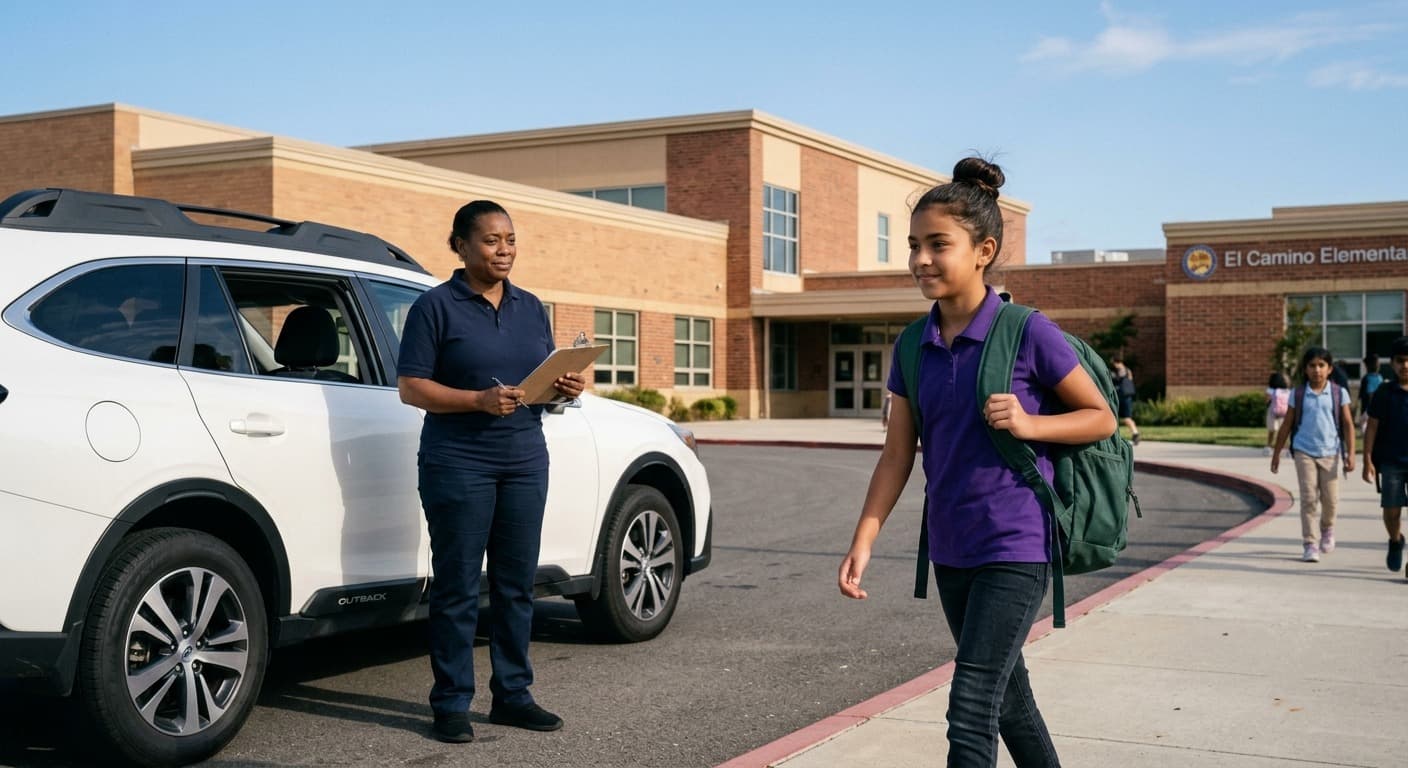
Under the McKinney-Vento Act, students experiencing homelessness have the right to transportation to their school of origin. In California, this is coordinated through county offices of education. In Illinois, through local liaisons. A transportation provider serving these students needs flexible routing, because a family's shelter location can change weekly. Rigidity is the enemy.
Early Childhood & Preschool Students
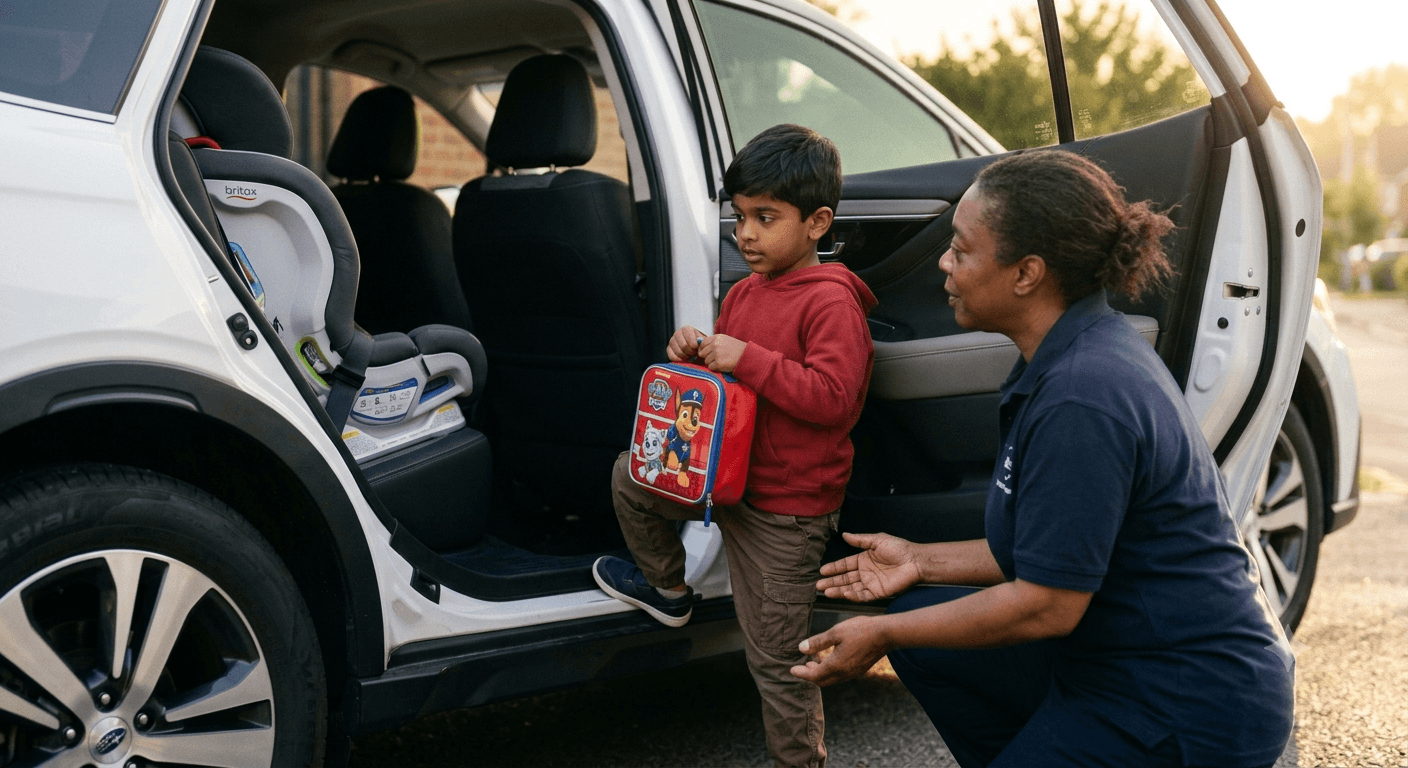
California's Early Start and Illinois's Early Intervention programs serve children as young as three. These aren't big kids who can buckle themselves. They need properly installed car seats, booster seats sized correctly, and drivers who understand that a three-year-old with a speech delay can't tell you if something is wrong. The vehicle should be equipped, and the driver should be trained in child passenger safety—not just adult transport.
Out-of-District & Magnet School Students
If your child attends a specialized program—maybe a STEM magnet in Chicago or an autism-specific school in Sacramento—district buses often don't run those routes. Private transportation fills the gap. But mileage adds up. A provider charging flat rates regardless of distance will either overcharge short-haul families or undercharge long-haul ones and cut corners. Look for transparent per-mile pricing.
Where to Find Specialized School Transportation
Yuni Rides currently partners with FirstAlt and school districts to provide transportation in the following regions. If your area isn't listed, contact us—expansion is ongoing.
California Service Areas
- Northern California (Sacramento, Elk Grove, Folsom, Roseville)
- Bay Area (San Jose, Fremont, Oakland, Hayward, Richmond)
- Central Valley (Stockton, Modesto—select routes)
- Greater Los Angeles (select districts through partner networks)
Illinois Service Areas
- Cook County (Chicago, Oak Park, Evanston, Skokie)
- DuPage County (Naperville, Wheaton, Downers Grove)
- Lake County (Waukegan, Buffalo Grove, Highland Park)
- Kane & Will Counties (select districts)
Frequently Asked Questions for California & Illinois Parents
- Does my child's IEP automatically include transportation in California or Illinois? A: Not automatically. Transportation must be discussed and written into the IEP if the IEP team determines it is necessary for the child to benefit from special education. In California, this is governed by Education Code and your local SELPA. In Illinois, by the State Board of Education and your district's policies. If it's not in the document, it's not guaranteed.
- Who pays for private school transportation if the district can't provide it? A: If transportation is in the IEP and the district cannot fulfill it, they may contract with a private provider like Yuni Rides through partnerships such as FirstAlt. In these arrangements, the family generally does not pay directly. Always confirm funding source before service begins.
- What should I ask a transportation provider before my child's first ride? A: Ask for: (1) Proof of state-specific insurance for child transport, (2) Driver background check documentation, (3) Whether the same driver will be assigned consistently, (4) Real-time tracking availability, (5) Emergency protocols, and (6) Training records for transportation monitors. If they hesitate on any of these, keep looking.
- Can a transportation monitor ride with my child? A: Yes. For students who require additional supervision—whether due to behavioral needs, medical fragility, or age—trained monitors may accompany the ride. This is often specified in the IEP or transportation plan and arranged through the district's authorized provider.
- What if my child has transportation anxiety? A: Consistency is the most effective intervention. A familiar driver, a predictable route, and advance communication about any changes can significantly reduce anxiety. Some providers allow a parent to ride along for the first trip. Ask specifically if this is an option in your service area.
- How do I know if a provider is legitimate and not just a ride-share driver with a website? A: Check for: a physical business address in your state, active business registration with the California Secretary of State or Illinois Secretary of State, specific child-transport insurance (not just personal auto), and references from other local families or school districts. A legitimate provider has nothing to hide.
Your Move
You don't have to accept late buses, unfamiliar drivers, and mornings that start with meltdowns. Whether you're in a Sacramento suburb or a Chicago neighborhood, the best school kids transportation service is one that understands your local schools, your state laws, and your child's specific needs. Start by asking your IEP team or school administrator what's actually available. Then ask the hard questions of any provider you're considering. The ones that answer clearly, specifically, and without hesitation? Those are the ones worth your trust.
Yuni Rides partners with FirstAlt and participating districts throughout California and Illinois to provide trained drivers, consistent assignments, and real-time communication for families who need more than a bus stop. If you're evaluating options in your area, we'd welcome the conversation. Because your child's education shouldn't depend on whether the district found a sub driver this morning.
Apply to Drive With Yuni Rides
Looking for a driving opportunity with predictable weekday schedules and consistent route assignments? Join Yuni Rides today and help make a difference in your community.