
Winter Weather Safety Tips for Student Transportation

Posted by: By Yunirides
Aug 23, 2026
The first snow of the season has an immediate effect on pickup times: visibility drops, roads that were part of routine till October can suddenly become hazardous, and for families managing special needs children, winter can add more complication to the routine.
Here's what really matters when winter weather affects student transportation, for parents deciding what to expect and providers deciding how to handle it.
Why Winter Isn't Just "The Same Route, Slower"
Winter changes time management in ways that aren't always obvious. Stopping distances increase significantly on icy or snow-covered roads, visibility drops during storms or even just early, dark mornings, and a route that takes twenty minutes in good conditions can easily take twice as long when conditions turn. A provider that drives the usual route more carefully without adjusting for changing conditions may be taking unnecessary risks.
What a Good Provider Actually Does Differently in Winter
If you're evaluating whether your transportation provider is prepared for winter, you need to look for specifics rather than a general reassurance that they're 'prepared.' A provider handling winter well typically has:
- A clear threshold for delaying or adjusting routes. This shouldn't be a judgment call made fresh every storm. Providers with real winter protocols have pre-set criteria, road condition thresholds, visibility minimums, that trigger a delay or route change automatically, rather than waiting to see how bad things get.
- Proactive communication before you'd otherwise wonder. The provider should inform you beforehand if a route is delayed or adjusted, before you're standing outside in the cold wondering where the ride is.
- Drivers trained specifically for winter conditions, not just general safe driving. Winter driving is a distinct skill — recognizing black ice, managing a skid, knowing when a route genuinely isn't safe to run rather than just uncomfortable.
- Vehicle readiness that's actually checked, not assumed. Tires that are recommended for winter conditions, defrosters and heaters that are in working condition, cold-weather-related pre-trip inspections, a battery that's more likely to fail, and fluid levels that behave differently in freezing temperatures.
What This Looks Like for Special Needs Transportation Specifically
Winter adds real complexity for students with medical or behavioral needs. A longer wait at a stop is a bigger deal for a child who's sensitive to cold or has a medical condition affected by temperature. A delayed pickup can throw off a schedule built around therapy or medical appointments that don't have much flexibility to move. And for students who rely on route and driver consistency as part of their accommodation, winter disruptions, if they happen without warning or communication, can be more destabilizing than the weather itself.
This is where a provider's winter protocol should go further than 'we'll be extra careful.' It should account for these specific needs directly: shorter outdoor wait times where possible, proactive communication with families managing appointment schedules, and a driver who knows this particular route and these particular students well enough to make good judgment calls in a genuinely difficult moment.
What Parents Can Do on Their End
Providers carry most of the responsibility here, but a few things on the family side make winter mornings smoother:
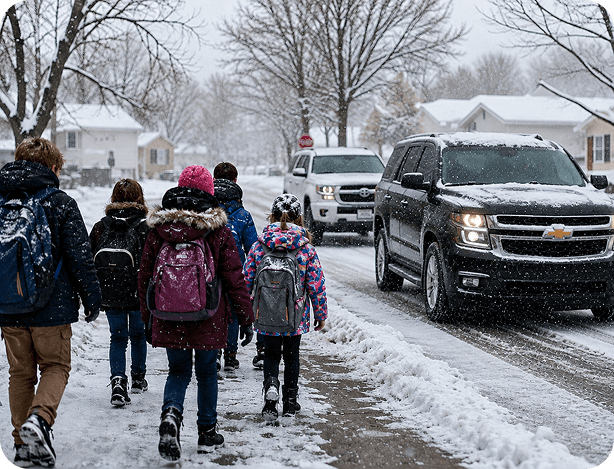
- Dress your child for the actual wait time outside, not just the ride itself, since a delay can mean more time at the stop than usual
- Build in extra buffer time on days with a winter weather advisory, even if the provider hasn't announced a delay yet
- Know your provider's communication method for delays before the first storm hits, not during it
- If your child has a medical condition affected by cold, make sure that's documented with your provider ahead of the season, not something you're explaining for the first time mid-storm
When a Delay or Cancellation Is the Right Call
Sometimes the safest decision is not running the route at all. A provider willing to make that call, even when it's inconvenient, is doing their job correctly. A provider who pushes through genuinely unsafe conditions to avoid a difficult phone call with parents or a district is prioritizing convenience over safety, and that's a red flag worth noticing, not a sign of reliability.
The Bottom Line
Winter doesn't have to mean chaos for student transportation, but it does require a provider who treats it as a distinct set of conditions rather than the same routine with extra caution layered on top. Clear thresholds for delays, proactive communication, trained drivers, and genuine attention to what winter means specifically for students with additional needs — that's the difference between a provider who's actually ready for the season and one who's just hoping it goes fine.
If you're heading into winter without confidence that your current transportation setup can handle it well, book a consultation with Yuni Rides to talk through what a real winter protocol should look like for your family.
And if you're a driver who takes winter conditions seriously and wants steady, well-supported routes rather than being sent out in conditions that aren't safe, see open driving positions with Yuni Rides.
Frequently Asked Questions
- How does snow affect school transportation? Snow and icy conditions increase stopping distances, reduce visibility, and may require longer travel times. Transportation providers may delay, reroute, or cancel services when road conditions become unsafe.
- Will I be notified if my child's ride is delayed? A reliable transportation provider should communicate delays or route changes as early as possible through its established communication channels so families can plan accordingly.
- Is it safe for children with special needs to travel during winter weather? Yes, provided the transportation provider follows appropriate winter safety procedures, maintains its vehicles, trains drivers for winter conditions, and communicates effectively with families when weather affects service.
- What should my child wear while waiting for transportation? Children should be dressed for outdoor winter conditions, including warm coats, hats, gloves, waterproof footwear, and layers that help them stay comfortable if pickup is delayed.
- When will student transportation be cancelled because of the weather? Each transportation provider and school district has its own weather policies. Decisions are typically based on road conditions, visibility, local weather advisories, and overall safety rather than snowfall alone.
- How can parents prepare for winter transportation? Parents can prepare by monitoring weather forecasts, keeping emergency contacts updated, understanding their provider's communication process, allowing extra travel time, and notifying the provider about any weather-related medical concerns.
Apply to Drive With Yuni Rides
Looking for a driving opportunity with predictable weekday schedules and consistent route assignments? Join Yuni Rides today and help make a difference in your community.